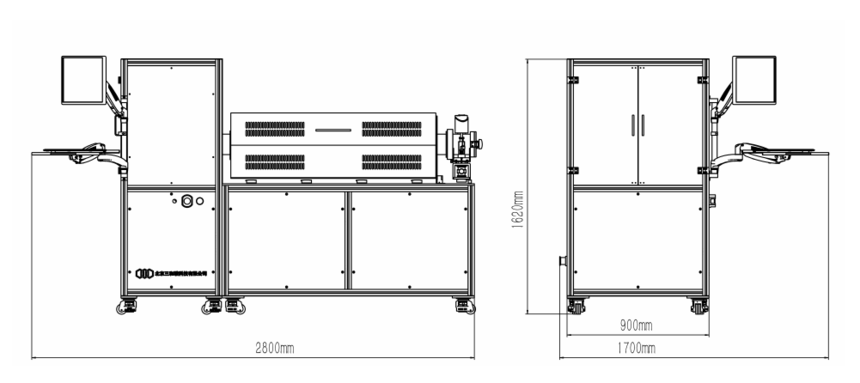
Capacitive Coupled Plasma Enhanced Chemical Vapor Deposition (CCP-CVD)

The Capacitive Coupled Plasma Enhanced Chemical Vapor Deposition (CCPCVD) machine developed by Beijing Sanhe Lian Technology Co., Ltd. is based on flat plate plasma technology and is a type of plasma enhanced chemical vapor deposition (PECVD) technology. CCPCVD uses a radio frequency power source to generate plasma, decompose ionization reaction gases, and generate active functional groups. These functional groups form thin film precursors and chemically adsorb onto the surface of the sample, generating solid film nuclei, and ultimately growing into continuous thin films in an island shape. Sedimentary facies.
Main configurations and functions of capacitance coupled plasma enhanced chemical vapor deposition:
1.Main configurations and functions of capacitance coupled plasma enhanced chemical vapor deposition: 1 Support sample size: 12 inches downward compatible, compatible with various small-sized samples;
2. RF plasma power range: 300/500/1000/1500 W optional;
3. Molecular pump: 620 l/s/1300 l/s optional, optional with anti-corrosion pump set;
4. Front stage pump: mechanical oil pump/dry pump optional;
5. Pressure control: 0~1 Torr optional; Non pressure control mode configuration can also be selected;
6. Process gas: Up to 12 process gases can be equipped simultaneously;
7. Gas range: determined according to user application requirements and system design, selectable within the range of 0~300 sccm;
8. Sample temperature control: room temperature~400 ℃;
9. Machine cooling: 10 ℃;
10. Fully automatic one key control system;
11. Main sedimentary materials: SiO2, SiNx, α - Si;